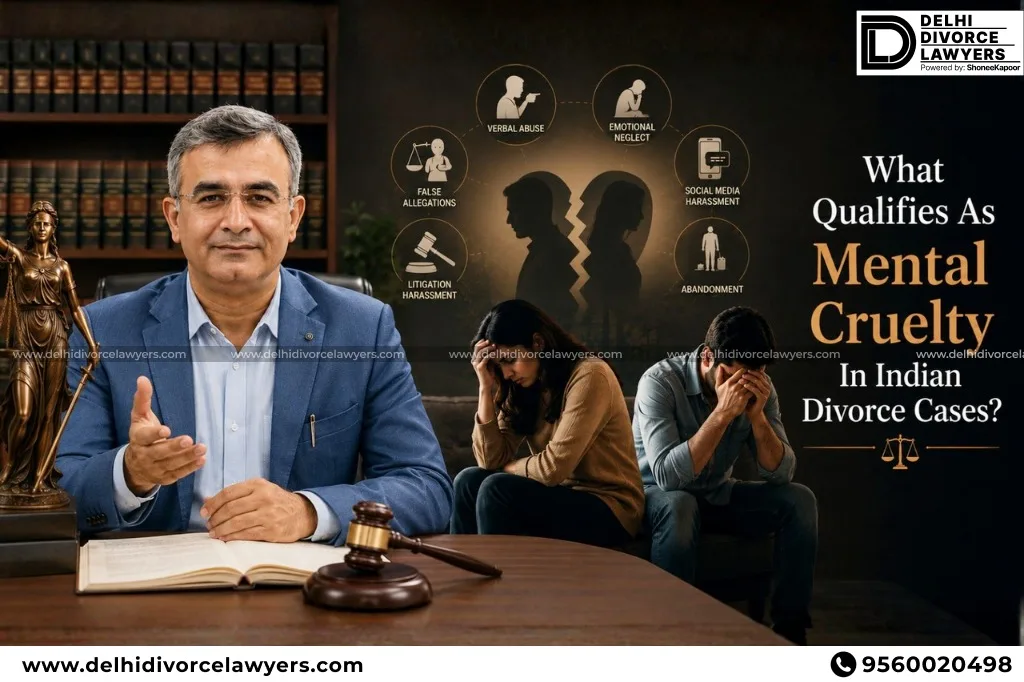
When Matrimonial Conduct Crosses The Line: Legal Standards, Landmark Judgments, And Practical Challenges In Proving Mental Cruelty
NEW DELHI: Marriage disputes in India are no longer limited to allegations of physical violence. A large number of modern matrimonial conflicts revolve around emotional abuse, false accusations, public humiliation, psychological manipulation, litigation harassment, and prolonged emotional neglect.
Indian courts have repeatedly recognised that mental cruelty can destroy a marriage just as deeply as physical cruelty.
Under Indian matrimonial law, cruelty is one of the most commonly invoked grounds for divorce. However, unlike physical violence, mental cruelty is not always visible. It is assessed through conduct, behaviour, intention, surrounding circumstances, and the long-term psychological impact on the spouse.
Courts have held that continuous humiliation, false criminal complaints, defamatory allegations, denial of companionship, repeated threats, emotional abandonment, and misuse of legal proceedings may amount to mental cruelty depending upon the facts of the case.
Legal Provisions Governing Mental Cruelty In India
Hindu Marriage Act, 1955
Under Section 13(1)(ia) of the Hindu Marriage Act, 1955, either spouse may seek divorce on the ground that the other party has treated them with cruelty.
The law does not specifically define the term “cruelty.” As a result, Indian courts have developed the concept through judicial interpretation over decades.
The provision states:
“Any marriage solemnised… may be dissolved by a decree of divorce on the ground that the other party has, after the solemnisation of the marriage, treated the petitioner with cruelty.”
Special Marriage Act, 1954
Section 27(1)(d) of the Special Marriage Act, 1954, also recognises cruelty as a ground for divorce in civil marriages.
Other Personal Laws
Cruelty is similarly recognised under:
- The Indian Divorce Act for Christians
- Muslim matrimonial jurisprudence in specific circumstances
- Parsi matrimonial law
However, the judicial interpretation under Hindu matrimonial jurisprudence has largely shaped the modern understanding of “mental cruelty” across Indian family law.
What Courts Have Recognised As Mental Cruelty
Indian courts have repeatedly clarified that mental cruelty cannot be confined to a fixed formula. What amounts to cruelty in one marriage may not necessarily amount to cruelty in another. Courts evaluate the social background, conduct of parties, duration of behaviour, and overall impact on matrimonial life.
False Criminal Cases And False Allegations
One of the most significant developments in matrimonial jurisprudence has been judicial recognition that false criminal complaints can amount to mental cruelty.
False allegations under:
- Section 498A IPC
- Domestic violence proceedings
- Sexual misconduct allegations
- Adultery accusations
- Dowry harassment complaints
have repeatedly been considered serious acts causing mental agony and reputational damage.
In K. Srinivas Rao v. D.A. Deepa, the Supreme Court held that filing false criminal complaints and making defamatory allegations against the spouse and his family could constitute mental cruelty warranting divorce.
Constant Humiliation And Verbal Abuse
Mental cruelty is not restricted to litigation alone. Courts have recognised that repeated humiliation, abusive language, emotional degradation, and public insults may also destroy the foundation of marriage.
Examples include:
- Regular insults before relatives or friends
- Character assassination
- Threats to destroy reputation
- Persistent abusive behaviour
- Humiliating the spouse’s parents or family members
The landmark judgment in Samar Ghosh v. Jaya Ghosh became one of the most important authorities defining mental cruelty in India.
The Supreme Court clarified that mental cruelty includes conduct causing such mental pain and suffering that it becomes impossible for parties to live together.
Denial Of Emotional And Physical Companionship
Indian courts have also recognised that deliberate denial of emotional intimacy, companionship, or marital relations over a prolonged period may amount to mental cruelty in certain circumstances.
Marriage is not merely a legal arrangement but also an emotional relationship involving companionship, trust, emotional support, and intimacy.
In Naveen Kohli v. Neelu Kohli, the Supreme Court observed that prolonged hostility, bitterness, and complete breakdown of emotional relations may justify dissolution of marriage.
Courts have noted that where the relationship becomes emotionally dead and psychologically destructive, forcing parties to continue the marriage may itself become unjust.
Litigation Harassment As Mental Cruelty
Indian courts increasingly recognise that matrimonial litigation itself can sometimes be weaponised.
Examples include:
- Filing multiple complaints in different jurisdictions
- Initiating repeated criminal proceedings
- Using maintenance proceedings as pressure tactics
- Continuous legal harassment against spouse and family members
Where litigation is found to be malicious, vindictive, or intended primarily to harass rather than seek genuine relief, courts may treat such conduct as mental cruelty.
Desertion Combined With Emotional Harassment
Mental cruelty may also arise where one spouse:
- Refuses cohabitation without justification
- Emotionally isolates the other spouse
- Uses children as instruments of pressure
- Creates sustained emotional instability
Courts assess whether the conduct reflects ordinary matrimonial discord or deliberate psychological cruelty.
Every disagreement or incompatibility does not amount to cruelty. However, sustained conduct causing deep emotional suffering may cross the legal threshold.
Social Media Harassment And Public Shaming
Modern matrimonial disputes increasingly involve digital evidence and online harassment.
Courts now frequently examine:
- WhatsApp chats
- Emails
- Audio recordings
- Social media posts
- Online accusations
- Public defamatory statements
Publicly humiliating a spouse online, spreading defamatory allegations, or threatening reputational destruction through digital platforms may significantly strengthen allegations of mental cruelty.
Landmark Principles From Samar Ghosh Case
The judgment in Samar Ghosh v. Jaya Ghosh remains one of the most cited authorities on mental cruelty in India.
The Supreme Court clarified that no uniform formula can define cruelty. Instead, courts must evaluate the overall matrimonial relationship and psychological impact.
The Court identified several illustrative situations that may amount to mental cruelty, including:
- Sustained neglect and indifference
- Denial of companionship
- Emotional abandonment
- Repeated humiliation
- Unilateral refusal of marital obligations
- False accusations and defamatory conduct
- Long periods of separation combined with hostility
The Court emphasised that matrimonial relationships must be assessed realistically and not through rigid technical standards.
How Mental Cruelty Is Proven In Court
Mental cruelty cases are heavily evidence-driven.
Common forms of evidence include:
- WhatsApp messages
- Emails
- Audio or video recordings
- FIRs and criminal complaints
- Acquittal judgments
- Medical records
- Witness testimony
- Social media content
- Call records
Courts generally evaluate:
- Consistency of conduct
- Duration of behaviour
- Psychological impact
- Overall matrimonial circumstances
An isolated argument or occasional disagreement is usually insufficient. Courts typically look for sustained conduct causing serious mental agony.
Practical Reality Of Mental Cruelty Litigation In India
While courts recognise mental cruelty as a serious matrimonial wrong, proving it remains extremely difficult in practice.
Psychological abuse often occurs privately without direct witnesses. Many litigants struggle to preserve evidence during emotionally stressful situations.
In several cases involving false allegations or prolonged litigation:
- Acquittals may take years
- Reputation damage becomes irreversible
- Financial strain becomes unbearable
- Children become collateral victims of matrimonial warfare
Many spouses, particularly men facing criminal complaints arising from matrimonial disputes, argue that the legal process itself creates long-term psychological trauma irrespective of eventual outcome.
At the same time, courts also remain cautious because ordinary marital wear and tear cannot automatically become grounds for divorce.
The judiciary therefore attempts to balance:
- Genuine claims of emotional abuse, with
- The reality that every unhappy marriage does not amount to legal cruelty
Irretrievable Breakdown And Mental Cruelty
Many mental cruelty cases eventually overlap with the concept of irretrievable breakdown of marriage.
In Naveen Kohli v. Neelu Kohli, the Supreme Court highlighted how prolonged hostility, endless litigation, and complete emotional collapse may leave no real possibility of restoring marital relations.
Although irretrievable breakdown is not yet a statutory ground under general matrimonial law, courts increasingly consider long periods of separation and psychological destruction while deciding cruelty cases.
CONCLUSION
Mental cruelty in Indian divorce law extends far beyond physical violence. Indian courts now recognise that emotional abuse, false criminal allegations, sustained humiliation, malicious litigation, reputational attacks, emotional abandonment, and psychological manipulation can deeply damage matrimonial relationships.
At the same time, courts continue to distinguish genuine cruelty from ordinary marital discord.
Every unpleasant marriage does not automatically justify divorce.
Ultimately, mental cruelty cases are decided through facts, evidence, surrounding circumstances, and the actual psychological impact of matrimonial conduct.
In modern matrimonial litigation, documenting conduct through records, messages, complaints, and consistent evidence often becomes decisive in proving emotional abuse before the court.
FAQs
- What qualifies as mental cruelty in Indian divorce cases?
Mental cruelty includes conduct causing serious emotional suffering, humiliation, psychological trauma, or mental agony that makes matrimonial life unbearable. - Can false criminal cases amount to mental cruelty?
Yes. Courts have repeatedly held that false allegations and malicious criminal complaints against a spouse may amount to mental cruelty. - Is every marital argument considered mental cruelty?
No. Ordinary wear and tear of marriage, minor disputes, and routine arguments generally do not qualify as legal cruelty. - What evidence is used to prove mental cruelty?
Courts commonly consider chats, emails, recordings, FIRs, social media posts, witness statements, and other documentary evidence. - Can long separation amount to mental cruelty?
Prolonged separation combined with hostility, emotional neglect, or litigation harassment may strengthen a claim of mental cruelty.